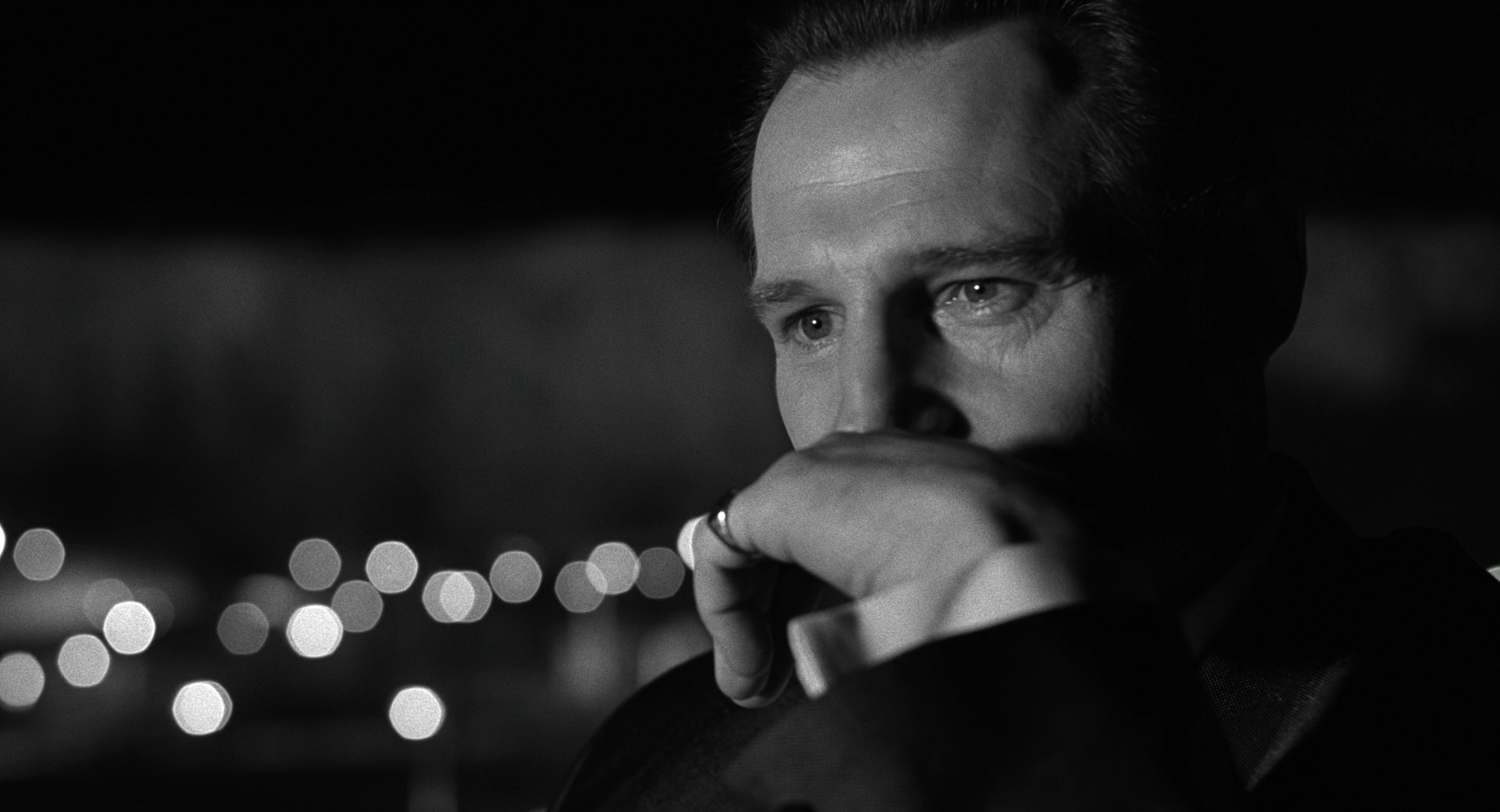
Therefore man was created single in the world to teach that for anybody who destroys a single life it is counted as if he destroyed an entire world, and for anybody who preserves a single life it is counted as if he preserved an entire world.
Jerusalem Talmud Sanhedrin 4:9
Heinrich W. Guggenheimer, 1999-2015
Table of Contents
Why Schindler’s List?
Schindler’s List is the third movie on the list of movies I am using for project CineCat. It also happens to be a movie I’ve heard about for a while which is not surprising considering the movie is as old as I am at and is a highly rated one to boot.
Considering the subject matter of the movie and from what I had gathered from other people I had mentioned watching this movie to, I knew I was going to be in for a heavy watch so I made sure to keep a box of tissues within arms reach because I had a feeling I was going to be doing a fair bit of crying during the movie’s run time.
Let’s get into it.
The Movie
Where do I even begin? I have been thinking about Schindler’s List ever since I finished watching it. I even lost some sleep this past weekend due to my brain replaying scenes from the movie over and over again. This movie is three hours long and it had me enraptured for its entire duration, I only took one short break to use the washroom. That in itself is commendable as movies this long very rarely keep my attention the whole way through.
The movie opens with a scene in colour, candles being lit for the Sabbath, the candle flames fade into smoke from a chimney as the movie transitions to the black and white presentation that it keeps for the rest of the movie. We get introduced to the main character Oskar Schindler, a industrialist who has arrived in Kraków from Czechoslovakia to do some war profiteering.
Oskar is vain, he is greedy. As a member of the Nazi party, he uses his access to Nazi officials to bribe his way into obtaining a enamelware company with the help of a Jewish accountant by the name of Itzhak Stern who is another one of the main characters of the movie.
Oskar hires Jewish workers since they are cheaper than hiring Poles. After this point, Schindler’s List takes on the patina of a documentary as it shows the creation of the Kraków Ghetto into which Polish Jews are forced into. We are shown the banal bureaucracy of names, papers, lists, of essential worker permits. We see Itzhak Stern help to hire fellow Jews for Oskar Schindler by telling the bureaucrat deciding where they go that they are an essential worker.
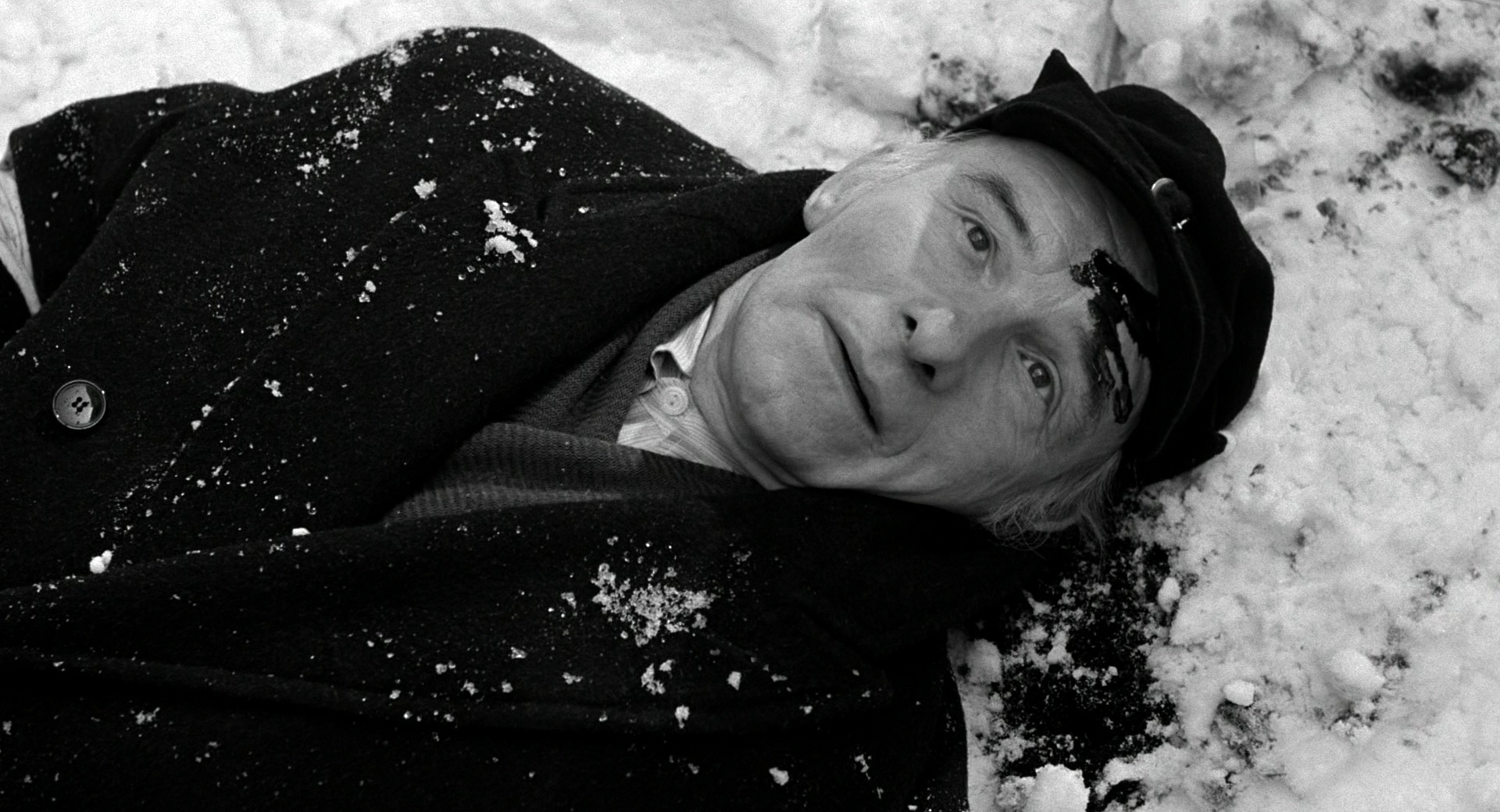
Bleak doesn’t even begin to describe it. I cannot get the scenes with the one-armed Jewish machinist out of my head. The day after that machinist thanks Oskar for giving him that job, the Nazis decide to have the workers of the factory shovel snow at the side of the road as a method of ritual humiliation. During that, one of the Nazis finds this machinist, jokes with him about being a “essential worker”, takes him away from the road and then shoots him in the back of the head.

We then get introduced to another one of the main characters of the movie, Amon Goeth, the Nazi officer in charge of the Kraków-Płaszów concentration camp. This role is played by Ralph Fiennes and I think he did an admirable job portraying the kind of evil person that runs a concentration camp. The coldness in his eyes in certain moments is…palpable.
After this arrives the bleakest scene I have ever seen in a movie. The so-called liquidation of the Kraków Ghetto in March 1943. Abject terror. Jews forcibly evicted from the ghetto and transferred to the camp. Jews killed outright and their bodies piled up on the streets of the ghetto.
During this scene, we see a transformation. Oskar Schindler observes some of this from horseback on top of a adjacent hill. He sees a little girl, her clothes rotoscoped into the colour red. We see the girl running in the streets alone, we see her go into an apartment building and hide under a bed. At night, the Nazis flush out any Jews hiding inside the ghetto’s residences by shooting through walls and ceilings.
From this point in the movie we see Oskar slowly transform from a heartless industrialist to someone who actively tries to save the Jews in his employ. He makes friends with Amon, he bribes more officials, he starts making the titular list. We see snippets of life in the concentration camp, death and indignity at every corner, violence in the air.
All of this is soundtracked by a score composed by the inimitable John Williams with the violinist Itzhak Perlman performing the violin solos. The tone of the score is appropriately dark in nature. It emanates a deep sadness and I think John Williams did a superb job of it and he rightfully won an Oscar for it.
This is the second time this year I have interacted with media regarding the Holocaust. The first when I read Molly Crabapple’s history of the Jewish Bund which featured large sections describing life in the Warsaw Ghetto, the resistance movements within and the sheer cruelty of it. To see that visualized in black and white in Schindler’s List made the subject matter hit even harder. Scenes from this movie are now imprinted in my brain and I will not forget it.
Concluding Thoughts
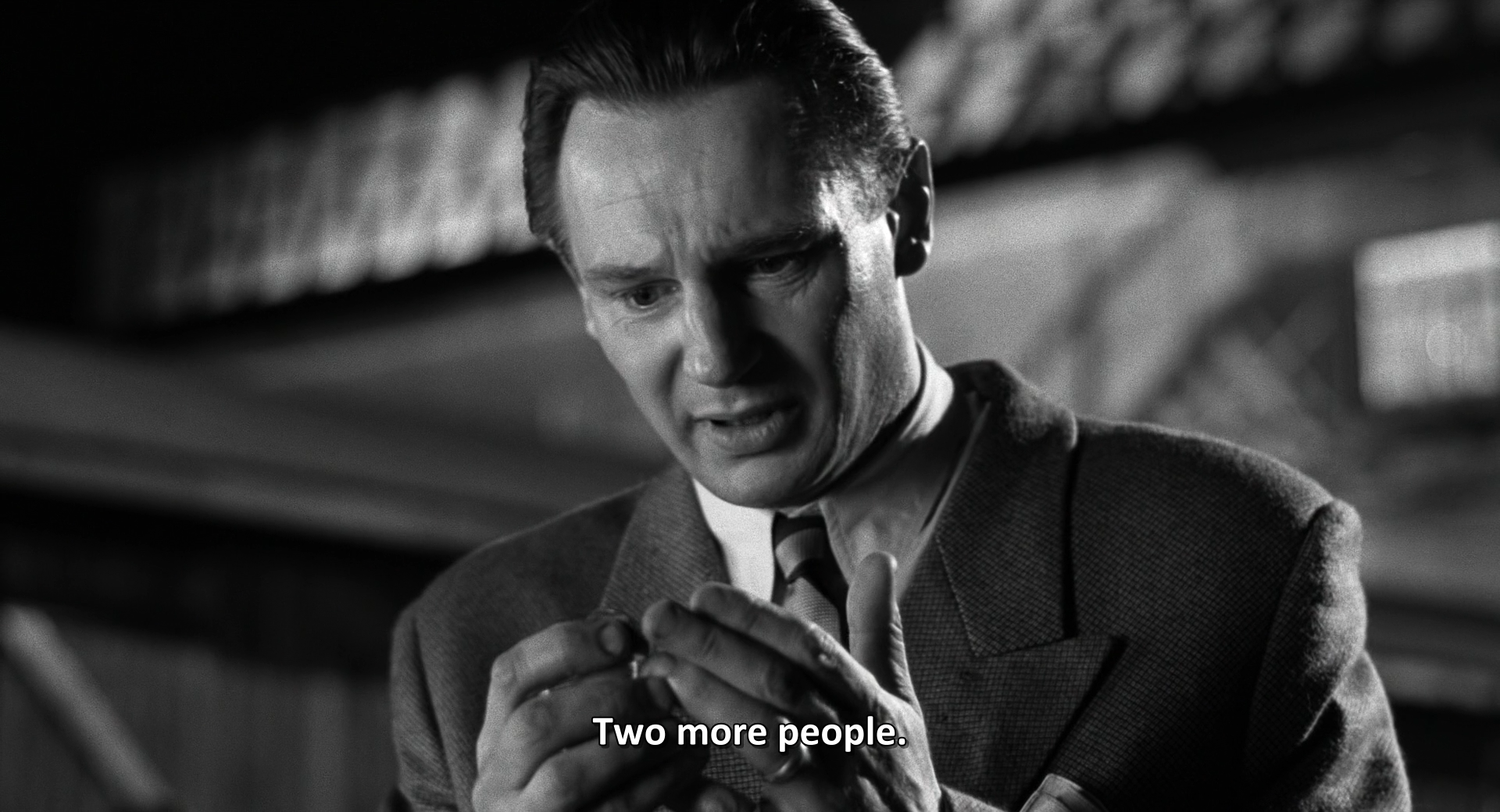
Schindler’s List is one of those movies I think everyone should watch at least once in their life. Like with Grave of the Fireflies, this is a movie I will watch once and never again, its scenes burned forever into my brain. The one-armed machinist, the little girl in red, Oskar crying at the end of the movie and all the rest.
I have not watched enough of Steven Spielberg’s catalogue to say that this is his best work but I’d hazard a guess and say there are probably very few of his movies that come close to the sheer quality of Schindler’s List. Everything from the cinematography, the performances, the music, the pacing – all of it is done really well.
This was a movie that was quite hard to review. Schindler’s List packs in quite a lot in its three hour runtime but it still doesn’t feel enough. The scope of the evil on display doesn’t seem like it could be captured in a three hour film but this movie did a damn fine job of it. I don’t think my review can quite do this movie justice, it is one you’ll need to watch for yourself.
I keep thinking about the relevance of this movie in our current age of livestreamed genocide. Will we get an equivalent movie in several decades about the genocide of Palestinians? Who is the Oskar Schindler of 2026? I don’t think any such specific person matters as much as the core message of the movie which is that fascism needs to be fought at every turn using whatever means we have at our disposal.
That’s all from me. See y’all in the next one.
P.S – Ralph Fiennes should have won the Oscar for Best Supporting Actor for his role portraying Amon. What a performance.
Thank you for reading this blog post. Please consider supporting my writing work through Patreon. Additionally, please share this post on your socials and/or with your friends. It really helps! If you have any thoughts/feedback/thoughtful criticism to share, feel free to use the handy contact me page to send that to me.