“Would you really like to remember all the things you’ve lost?” R asked.
page 82
I told him the truth. “I don’t know. Because I don’t even know what it is I should be remembering. What’s gone is gone completely. I have no seeds inside me, waiting to sprout again. I have to make do with a hollow heart full of holes. That’s why I’m jealous of your heart, one that offers some resistance, that is tantalizingly transparent and yet not, that seems to change as the light shines on it at different angles.”
Table of Contents
Why The Memory Police?
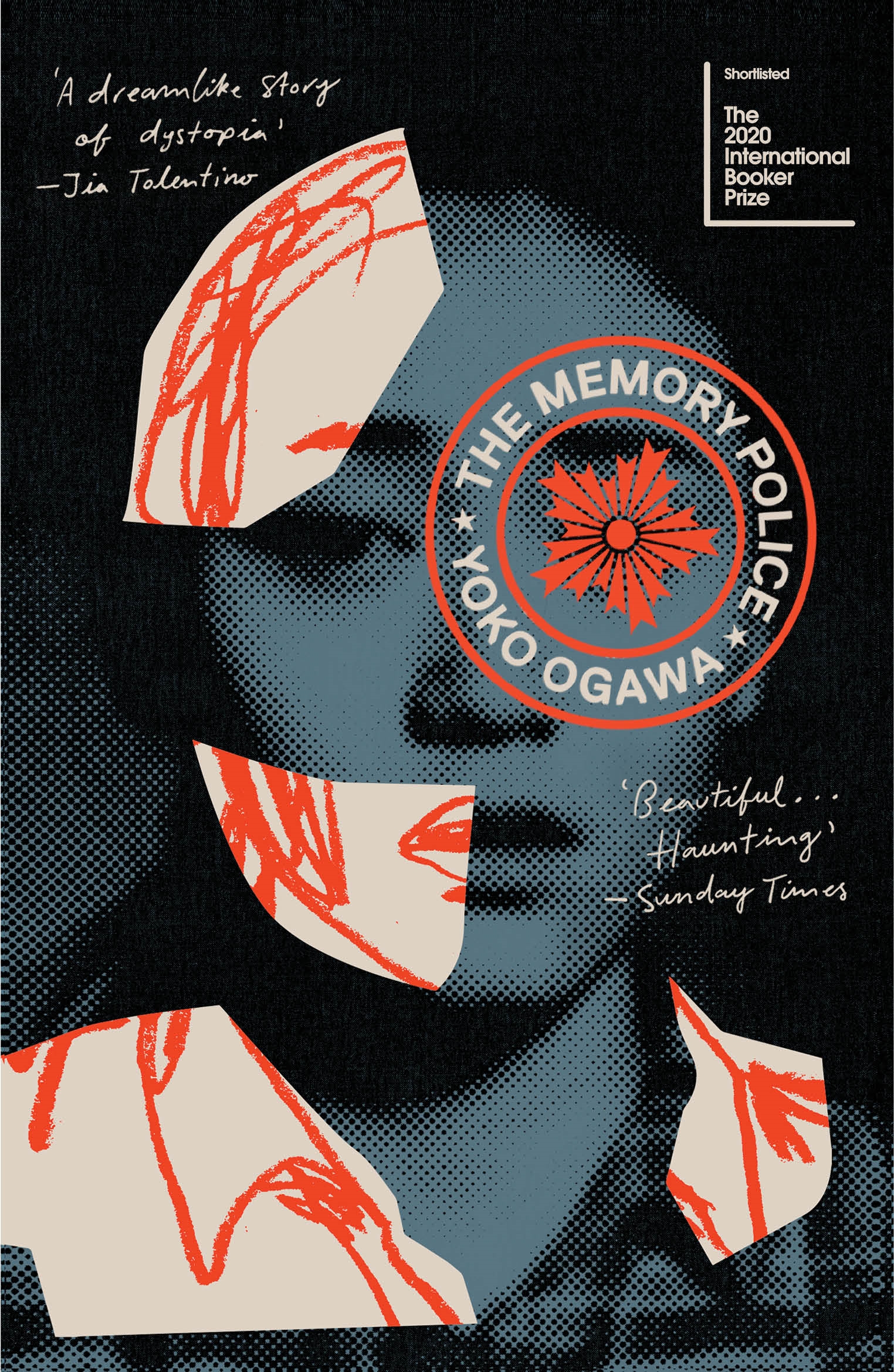
The Memory Police is the lexi aka newlynova book club pick for the month of April 2026. This is not a book that would usually be on my radar as it is dystopian literary fiction. While I am warming up to literary fiction more these days, dystopian fiction is still something that I am not usually into.
I think I heard about this book many years ago, most likely some time around 2020 or 2021. This book was shortlisted for the 2020 International Booker Prize so that seems to be the most likely time in which I would have heard about this book. This is my first time reading anything by Yoko Ogawa.
Another notable aspect of this book is that this is a translated version of the story. The novel was originally published in 1994 in Japanese and according to Storygraph’s list of editions, the first English edition was published in 2019. This edition was translated by Stephen Snyder.
This is notable because I very rarely read translated fiction, the last time I did so was Welcome to the Hyunam-Dong Bookshop by Hwang Bo-Reum back in the summer of 2024. That particular title was translated from Korean to English. I don’t read a lot of translated fiction because I find it difficult to get a grasp on the voice of the text.
I cannot tell if it is the voice of the translator or the original author or both speaking. I cannot tell what is an artifact of the translation and what is the intent of the original text. There is both something lost and something gained in such translated texts. The difficulty comes in ascertaining the difference between the two.
Let’s get into it.
The Book
The Memory Police is a dystopian fiction novel that takes place on an unnamed island off an unnamed coast. On this island, objects are disappearing from physical space and from the memories of most of the inhabitants of the island. There are some who are able to retain their memories of these lost objects and they are hunted down by the titular Memory Police.
The story is told from the perspective of an unnamed young woman, a novelist who finds out that her editor R is being hunted by the Memory Police and concocts a plan to hide R from them along with another unnamed old man who is the FMC’s friend and is sympathetic to her desire to help R.
This is where my initial criticisms of the book come in. I found it fairly annoying that this book’s main character is never named and there is only one actual named character, and he only gets an initial. Unlike Open Water which also has such unnamed main characters, I never quite felt like I was able to inhabit the FMC’s (female main character) mind and I felt disconnected from her and the world of this book.
The world in The Memory Police is quite dark and dystopian. This is the primary strength of its novel, there is a sense that the world of this book is becoming increasingly devoid of joy, happiness, and even the necessities of life. The book is not subtle with its commentary on the nature of living under a repressive authoritarian state. The Memory Police are depicted as cold, soulless agents of the state who only seek to enforce its laws.
Also very much present is commentary on the nature of memory. Large sections of the book involve the FMC discussing such matters with R and R trying to express why the small memories of everyday objects are important to the heart and soul. I found this aspect of the book to be rather poignant.
“They may be nothing more than scraps of paper, but they capture something profound. Light and wind and air, the tenderness or joy of the photographer, the bashfulness or pleasure of the subject. You have to guard these things forever in your heart. That’s why photographs are taken in the first place.”
page 94, R
As for the translation, I found it to be fine, pretty good even. I think the translation portrayed the increasingly bleak dystopian world quite well. At times I felt that the prose felt a little too sterile and cold but that is in fact the world that is being portrayed so that is not a major complaint.
The Memory Police also indulges in a bit of meta-fiction, parts of the book are excerpts from a novel that the FMC is writing. The only thematic connection I could suss out from that bit of meta-fiction is the loss of the character’s voice and her sense of self which reinforces that theme in the main narrative of the book. I don’t think those themes needed reinforcing and these meta-fiction sections felt superfluous.
Concluding Thoughts
The Memory Police was technically fine. It did a more than adequate job of portraying a bleak dystopian world with its plot and character interactions. However, its use of unnamed characters and occasionally sterile prose left me feeling disconnected from the overarching narrative and at the end of it I didn’t come away feeling particular strongly about any of it.
As far as dystopian fiction is concerned, this did not move the needle for me either way. I continue to not be interested in most types of dystopian fiction with the notable exception of cyberpunk fiction. That said, I am now open to reading more translated fiction in the future and I welcome suggestions along that front.
That’s all from me, see y’all in the next one.
Thank you for reading this blog post. Please consider supporting my writing work through Patreon. Additionally, please share this post on your socials and/or with your friends. It really helps! If you have any thoughts/feedback/thoughtful criticism to share, feel free to use the handy contact me page to send that to me.