She wants to say, what you’re missing is that I’ve been happy. What you’re missing is that for the first time in years I don’t feel like a disease waiting to be happy or a problem to be solved until I’m back in the now, until she and I are apart.
page 44, from the short story named Madeleine
Table of Contents
Why Seasons of Glass and Iron?
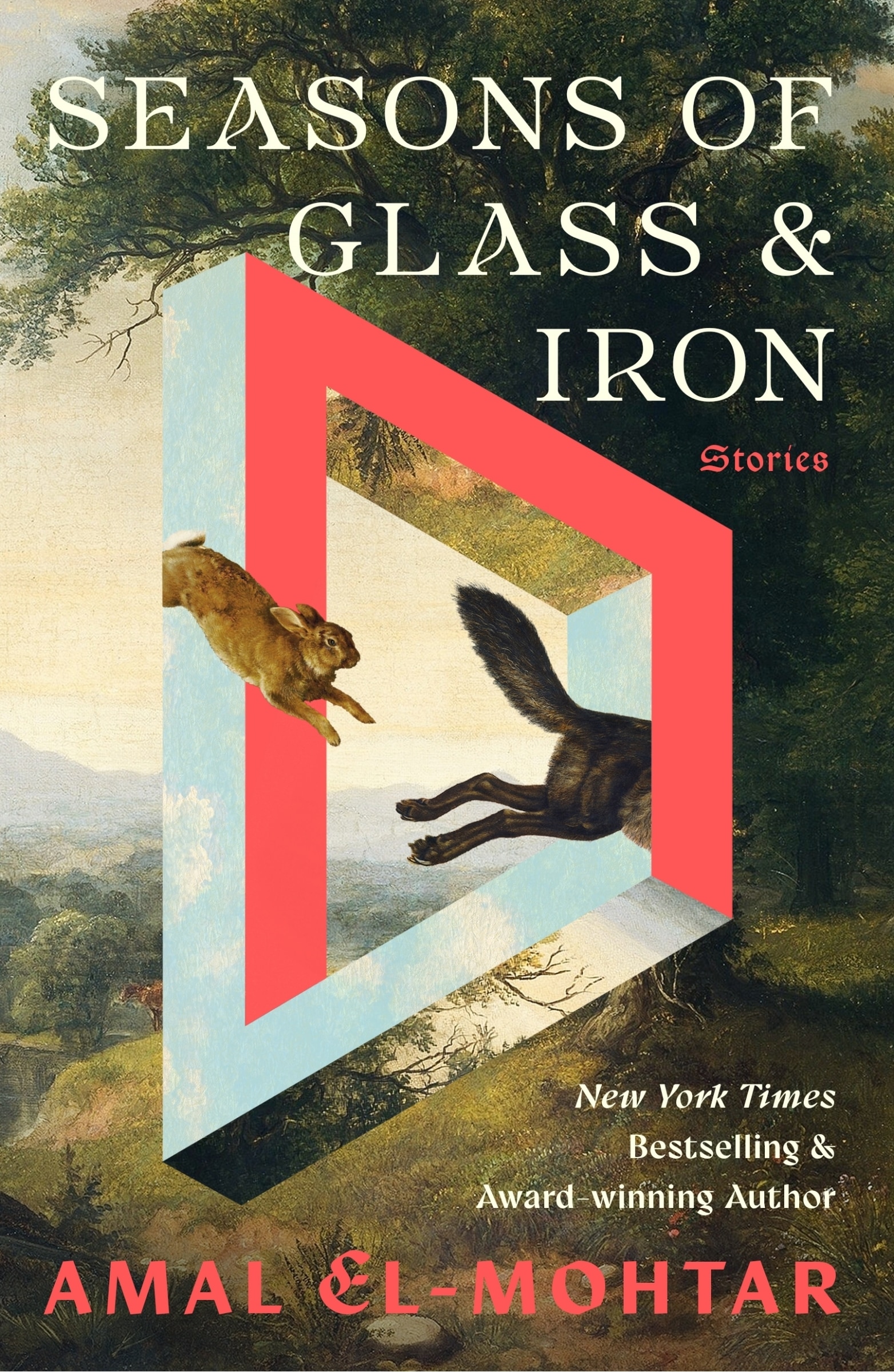
I have been a fan of Amal El-Mohtar’s writing ever since I first read This Is How You Lose the Time War, after that I read The River Has Roots which I also liked though not as much as the first title. So when cari can read mentioned that Seasons of Glass and Iron was coming out in her 2026 anticipated fantasy/sci-fi releases video I immediately placed a preemptive hold for it at the library.
My hold arrived shortly after the book’s release and it just so happens to have arrived after I had just finished reading a few long dark fantasy novels back to back to back. So I was glad for the change of pace and a palate cleanser. A 196 page short story anthology was just perfect for that.
Author blurbs on the back of the hardcover edition I read – T. Kingfisher, Fonda Lee, Ananda Lima, Holly Black.
Let’s get into it.
The Book
Seasons of Glass and Iron is mostly a short story anthology. I was pleasantly surprised to find that there were four poems amongst the fourteen short stories present. I did not know that Amal El-Mohtar wrote poetry but considering the poetic prose in her previous books, it makes sense. Of course, she writes poetry.
It has been a while since I have reviewed an anthology like this, the last time was the venerable Stories of Your Life and Others by Ted Chiang. Like with that previous review, I won’t endeavour to review every single story and poem in the collection, only the ones that had made me feel something.
The book starts off with an introduction which is the only thing Amal El-Mohtar wrote specifically for this book and it has her reflecting on the nature of these stories some of which were written a very long time ago when she was a different person in different circumstances. The key conclusion she came to about these stories is her love for women.
Mostly, what emerged is that I love women.
page 2, Introduction
I love women talking to each other. I love women reading each other, through letters and journals and flowers, offering up the stories of themselves to each other’s tender scrutiny. I love women being friends and being lovers, in all of their shapes across the breadth and depth of their lives. Over and over, in these stories I find myself returning to what Emily Yoshida called “the terrifying magic of two women in a room, talking and agreeing that “there is still so much of it that we haven’t explored yet.”
And, I am happy to say that this thematic undercurrent is present through all the stories in this collection. Every story that had characters in it had a woman as the main character and there was also a variety of types of women, in a variety of situations, fantastical or otherwise. Amal’s love for women was very much felt by me while reading this.
The first story in the book, is the titular Seasons of Glass and Iron very much demonstrates this love for women. This is a fairy tale like story of two women breaking free of their respective chains together. I love me a fairy tale story about women realizing their power so the book was already off to a fantastic start.
Perhaps, she thinks, it isn’t strange at all: Why shouldn’t shoes help their wearers travel? Perhaps, she thinks, what’s strange is the shoes women are made to wear: shoes of glass; shoes of paper; shoes of iron headed red-hot; shoes to dance to death in.
page 6, Seasons of Glass and Iron
The second story, The Green Book is a fantasy tale about a book with a soul and the bit from it that made an impact on me was this. It captures perfectly the feeling of having my writing read and of people complimenting me on my writing.
Being read is like feeling beautiful, knowing your hair to be just-so and your clothing to be well-put-together and your colour to be high and bright, and to feel, in the moment of beauty, that you are being observed.
page 29, The Green Book
The third story is the story that I think is the best out of all of them and it had the most impact on me. It is called Madeleine and it is about memory, grief, and loss. It captures all of these so beautifully in such a short amount of time. This one gets two quotes!
Grief, thinks Madeleine now, is an invasion that climbs inside you and makes you grow a wool blanket from your skin, itchy and insulating, heavy and grey. It wraps and wraps and wraps around, putting layers of scratchy heat between you and the world, until no one wants to approach for fear of the prickle, and people stop asking how you are doing in the blanket, which is a relief, because all you want is to be hidden, out of sight. You can’t think of a time when you won’t be wrapped in the blanket, when you’ll be ready to face the people outside it–but one day, perhaps you push through. And even though you’ve struggled against the belief that you’re a worthless colony of contagion that must be shunned at all costs, it still comes as a shock, when you emerge, that there’s no one left waiting for you. Worse still is the shock that you haven’t emerged at all.
page 33-34, Madeleine
She wants to say, what you’re missing is that I’ve been happy. What you’re missing is that for the first time in years I don’t feel like a disease waiting to be happy or a problem to be solved until I’m back in the now, until she and I are apart.
page 44, Madeleine
The next three stories that made an impact were all poems. The first is called Qahr, a poem about a deep sense of grief and loss. Qahr is an Arabic word and the poem was also translated to Arabic for this collection. I wish I could read and understand Arabic so I could get a feel for what this poem feels like in Arabic.
as if a single word in any language
page 84, Qahr
could hold all this wrecking grief.
The second poem, called Thunderstorm in Glasgow, July 25, 2013 is about the loss of language and cultural heritage.
you left raaed, ghaymi, aasfi, hammam,
page 126, Thunderstorm in Glasgow, July 25, 2013
aaskar in your mother’s hand,
spoke English to the rain
The third poem, called Pieces is about war.
I will not speak of your countries
page 147, Pieces
of this language we share
that is not glass. I will not speak
of your smoke
and your silence and the bullets stitching purpose to our backs.
All of the poems in this collection are lovely and I was very happy to read them. I would definitely read an anthology of poems written by Amal El-Mohtar if she ever decides to put more poems out. These poems were so good that they inspired me to write one of my own which is a very rare occurrence.
Another story that I loved was the one called Florilegia; Or Some Lies About Flowers which is a retelling of a story from Welsh mythology, namely the story of Blodeuwedd. Like with the first story in this has a fairy tale like quality to it and also features a woman realizing her own power and falling in love with another woman. Fairy tale sapphic romance? Sign me the fuck up.
“You were made of flowers, my live, but those are only pieces of you, the seeds from which you grew. You–you cannot be pressed into a book. You are so much more than the work of wizards.”
page 180, Florilegia; Or Some Lies About Flowers
Seasons of Glass and Iron closes out with a story called Pockets and I just really love this bit from the story.
I don’t know you, but I wish I did; I wish I could tell you how much I loved you, love your eyes for reading this, love your hands for holding my words. I wish I could tell you in a way you would understand that so long as you read this the world is not so terrible a place; that so long as we speak to each other, so long as there is love in the movement of a pen over paper and love in the movement of eyes over words we will be all right, we will know each other , we will learn each other like songs.
page 193, Pockets
A beautiful sentiment that we need more of in this world of ours.
Conclusions
Seasons of Glass and Iron was a lovely read. Not only was it a more than adequate as a palate cleanser, it also delivered more of Amal El-Mohtar’s beautiful writing in the form of poignant short stories and poetry. This book was short, sweet and packed an emotional punch.
I will definitely be reading more of Amal El-Mohtar’s writing in the future, whether it be collections like these or longer novels/novellas. She is currently one of my fairly short list of favourite writers and on the even shorter list of authors who inspire me to write poetry. That list is just her at the moment.
That’s all from me. See y’all in the next one.
Thank you for reading this blog post. Please consider supporting my writing work through Patreon. Additionally, please share this post on your socials and/or with your friends. It really helps! If you have any thoughts/feedback/thoughtful criticism to share, feel free to use the handy contact me page to send that to me.