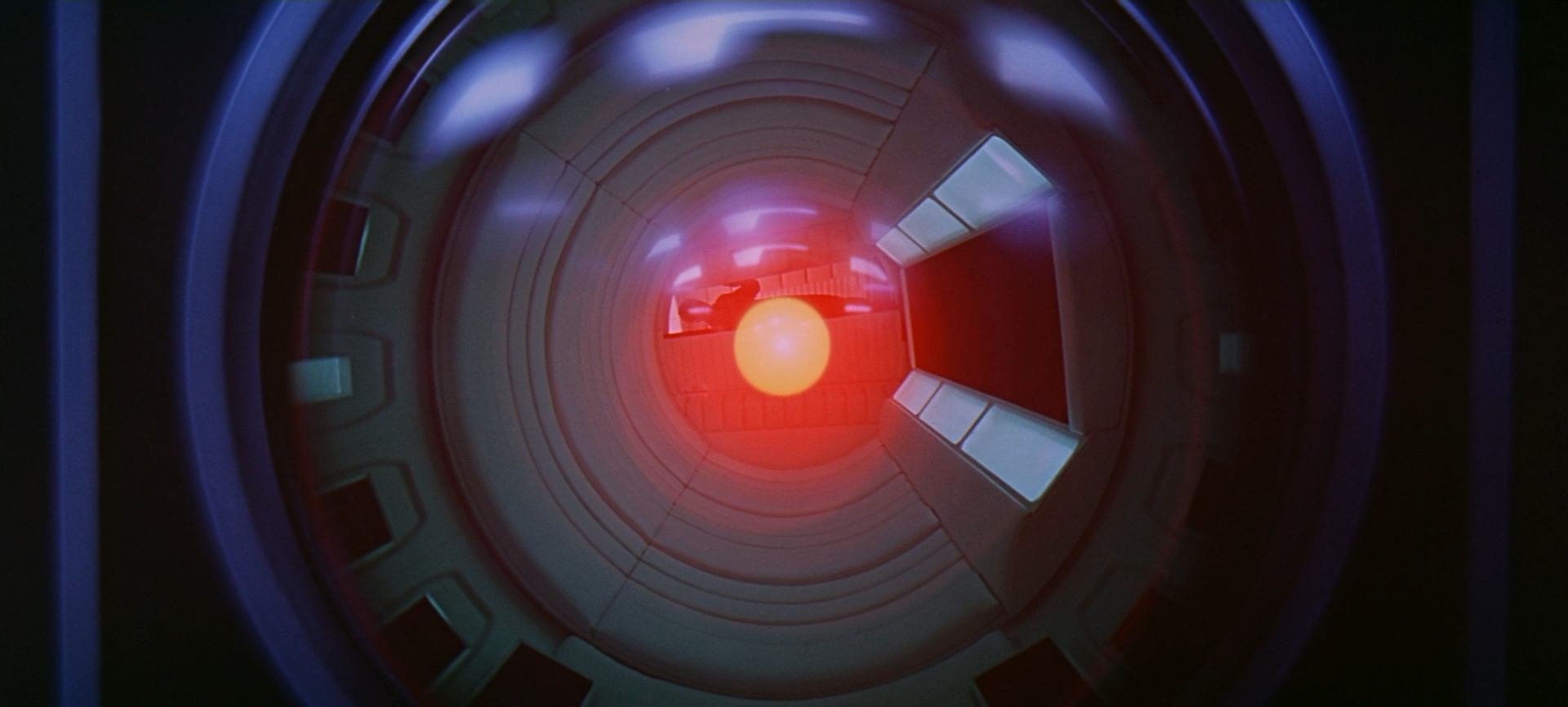
I’m afraid I can’t do that, Dave.
HAL-9000 computer to Dave
Table of Contents
Why 2001: A Space Odyssey?
2001: A Space Odyssey happens to be the second movie on the Letterboxd list of movies I’m using for project CineCat. As a science fiction enjoyer I have long since been aware of Arthur C. Clarke (who was one of the writers for this movie) and the famous HAL-9000 line that I quoted in the opening is one I’ve seen referenced countless times.
Suffice to say, I was intrigued going into this movie, I wanted to see what about this movie made it so influential to science fiction movies that came after it. There was some trepidation as I imagined there would be some level of the Seinfeld Effect applied to this movie as someone whose experience with science fiction movies/TV shows came well after this movie – 90s Star Trek, Babylon 5, The Matrix etc.
Let’s get into it.
The Movie
2001: A Space Odyssey is a science fiction movie that tells the story of humanity finding a mysterious object on the Moon and then setting off on a long journey to Jupiter along with the HAL-9000 supercomputer to find its origins. That is the basic description of the movie and to be quite honest, the actual movie doesn’t expand much upon that premise.
First thing of note is that this is a very pretty movie. Incredible visuals on display all throughout the movie. The movie looks very good, especially for a movie from 1968. I watched this on a computer monitor sitting at my desk like I usually do for movies and I think this is one of those movies that definitely is made for a big screen movie theatre experience.
And that is where my compliments end. As pretty as 2001: A Space Odyssey is to look at it is also equally dull. This is a slow, ponderous movie. The first bit of dialogue in the movie doesn’t occur till about 25 minutes into the movie’s two and a half hour runtime. This would perhaps be fine if what was happening on screen was actually interesting but it is not.
Almost all of the spoken dialogue in this movie is extremely banal, and when there isn’t any dialogue the movie will overlay some bit of classical music on top to give the movie a sense of grandeur and meaning that it sorely lacks in its moment-to-moment action. Now, I love classical music, in fact I am listening to some Beethoven as I write this review but the use of classical music here came off as an exercise in intellectual masturbation.
In the second half of the movie, there are some very long space walk scenes where the only thing that is audible is the astronaut breathing. Stanley Kubrick’s creative vision was to have a mostly non-verbal experience that gave the watcher the room to ponder the vastness of space, the nature of humanity etc. Which I imagine works for some people, I was not one of them. Listening to someone breathe into a microphone for minutes on end is excruciatingly dull.
Let’s talk themes and messages. 99% of 2001: A Space Odyssey isn’t saying anything meaningful. The non-verbal nature of the movie does succeed in giving a lot of time for the watcher’s mind to ponder but the contents of the movie doesn’t actually provide anything worth pondering.
I reckon some of this is a side-effect of when I watched. I imagine this movie was a lot more interesting as a science fiction movie in 1968 than it is to me now in 2026. But as someone whose formative science fiction TV experience was Star Trek: The Next Generation and episodes like Measure of a Man, this movie is not offering me anything I haven’t already seen before.
The infallibility of computers is a topic that is indeed quite relevant to our current age of so-called AI but all this movie really has to say about that is – “hey, computers aren’t infallible and maybe they can have real human emotions?” – which I imagine went hard in the 1960s but is a rather trite thought now. Science fiction that came after and even some that came before explored the concept of AI sapience in further depth than this movie did.
Concluding Thoughts
2001: A Space Odyssey was a feast for the eyes but not for the mind. I found myself bored and disinterested in the movie as it progressed since very little of note happens throughout the entirety of the movie. What little spoken dialogue is there is banal and the narrative itself doesn’t provide any of the food for thought required to make this a movie worth pondering.
I suppose there are worse ways to spend two and a half hours of a Saturday and this is slightly better than watching paint dry, but only slightly.
Thank you for reading this blog post. Please consider supporting my writing work through Patreon. Additionally, please share this post on your socials and/or with your friends. It really helps! If you have any thoughts/feedback/thoughtful criticism to share, feel free to use the handy contact me page to send that to me.