So blind we humans are—so blind. To each other and to ourselves, moving through life as though through shadows, putting out a hand in the dark and thinking we have touched someone. And maybe we have, as Artie did with Rhonda Lazarre that day. But mostly we travel through life unsighted, grasping only the smallest details of one another’s selves, including our own. Thinking all the while that we can see.
page 59
Table of Contents
Why The Things We Never Say?
The Things We Never Say is the second 2026 Booker prize longlist entry of the three that I have picked up. The first being All Them Dogs which read just before this. My interest in the premise of the book was fairly minimal but I still want to read more literary fiction this year and I also saw it on my local indie book store’s best sellers list so I bought myself a copy.
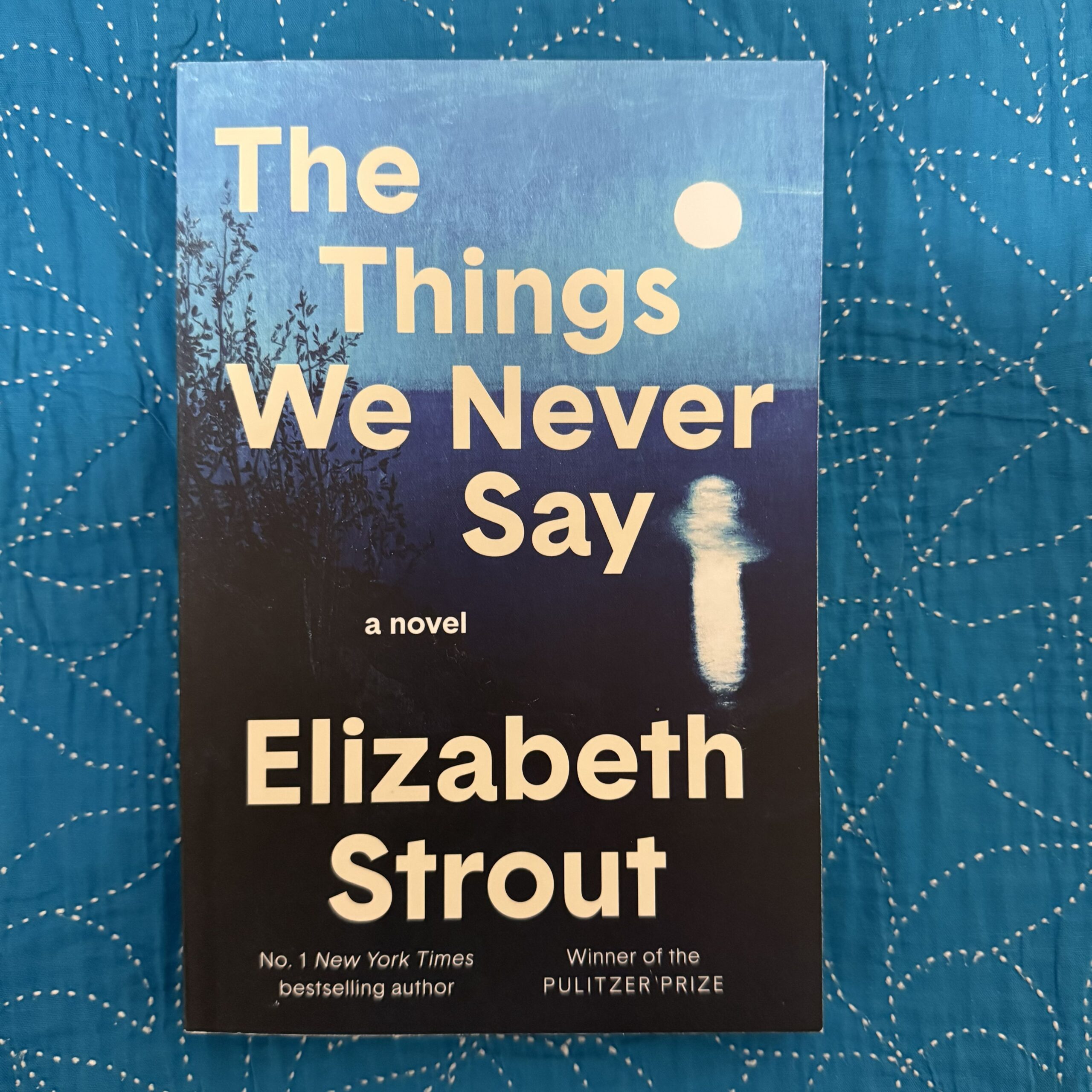
I read a paperback edition (ISBN/UID – 9798217199839) published by Random House Publishing Group in May 2026. No author blurbs on this edition. This is my first time reading anything by Elizabeth Strout.
Let’s get into it.
The Book
The Things We Never Say is a literary fiction novel that tells the story of one Artie Dam, a high school history teacher who outwardly seems to have a good life but as the world starts to fall apart around him Artie starts to feel isolated from the world. He starts feeling like he doesn’t really know the people around him, even the people closest to him. And, then one day Artie learns a secret that leads to his life unravelling even further.
This is a book about loneliness.
Loneliness does not come from having no people about one, but from being unable to communicate the things that seem important to oneself, or from holding certain view which others find inadmissible.
Carl Jung
That is the epigraph of this book. And, then the book opens with Artie recounting the last in-person meeting with his best friend Flossie MacDonald who has since moved away to live with her daughter. Flossie tells Artie to stay jovial in way that feels likes foreshadowing because it is all downhill from there. Losing Flossie was a blow that Artie never quite recovered from.
Artie is a kind man. In his job as a history teacher at the local high school, he teaches history with a heartwarming enthusiasm for the subject. He treats all his students with respect even the ones that cause problems. Throughout the book we see a couple of his students – Danny Marino & Rhonda Lazarre be profoundly affected by the care that Artie shows for them. In short, he is one of those teachers who changes their students lives for the better.
In all of this, Artie feels increasingly isolated at a world that is falling apart around him. Most of this book takes place right before Donald Trump is re-elected for his second term in office and the prospect of another four years of Trump increasingly agitates Artie. His wife, Evie doesn’t quite seem to be as worried as he is and the people around him aren’t either.
This sense of isolation leads back to the Carl Jung quote about loneliness. Artie isn’t able to communicate the things that are important to him to others around him, even those who are close to him. Artie is obsessed with the concept of free will, he spends a lot of time thinking if humans have free will or not and nobody else he asks about this except for his son Rob is really interested in having that particular discussion with him.
He was not fully himself any longer. He could not have described this to anyone, and he could not describe it to himself, but his mind seemed to be increasingly separated from the world: His mind was here, and the world was there. He was on a downward-sloping path, and no matter how hard he would try, he understood that day as he sat in his car that something was going to happen to him and he would not be able to prevent it.
page 195, Epilogue
At first reading, it seems the conclusion that The Things We Never Say comes to on the topic of free will is that it really does not exist. Destiny is set in stone and free will is a cruel joke played on us by the Fates. But after thinking about it some more, I came to the conclusion that humans do have free will and that can be used to perform good acts like Artie did for his students. It may not change what is destined to be but the exercise of free will in service of good is worth it even and especially in a world on fire.
Concluding Thoughts
The Things We Never Say was a good read. Due to its length (203 pages) I ended up reading the entirety of the book in one sitting and have been pondering it ever since. This book left me in a ponderous mood. Artie’s life, the way he lived it, the people around him—all of it was written beautifully, even side characters getting just enough characterization to make the world feel alive.
Like with All Them Dogs I can see why this book was longlisted for the 2026 Booker Prize. Every aspect of it is well executed and I did not find any notable flaws. I quite liked Elizabeth Strout’s writing style in this book. It is very economical and yet still maintains a good level of poignancy to it I would love to read more of her work in the future, suggestions on that front are welcome.
I have one more 2026 Booker Prize longlist entry that I am planning on reading—however I am a bit burned out on literary fiction so I will be reading some fantasy and/or science fiction next to switch things up. More generally I am expecting a slow down in my reading pace in September as I prepare for my Vancouver vacation so if you see fewer reviews next month that will be why.
That is all from me, see y’all in the next one.
Thank you for reading this blog post. Please consider supporting my writing work through Patreon. Additionally, please share this post on your socials and/or with your friends. It really helps! If you have any thoughts/feedback/thoughtful criticism to share, feel free to use the handy contact me page to send that to me.