And yet, if one has committed oneself to the page, the tragedy I’ve just laid out will not apply. Imagine, the letters one has sent out into the world, the letters received back in turn, are like the pieces of a magnificent puzzle, or, a better metaphor, if dated, the links of a long chain, and even if those links are never put back together, which they will certainly never be, even if they remain for the rest of time dispersed across the earth like the fragile blown seeds of a dying dandelion, isn’t there something wonderful in that, to think that a story of one’s life is preserved in some way, that this very letter may one day mean something, even if it is a very small thing to someone?
page 46, Sybil
Table of Contents
Why The Correspondent?
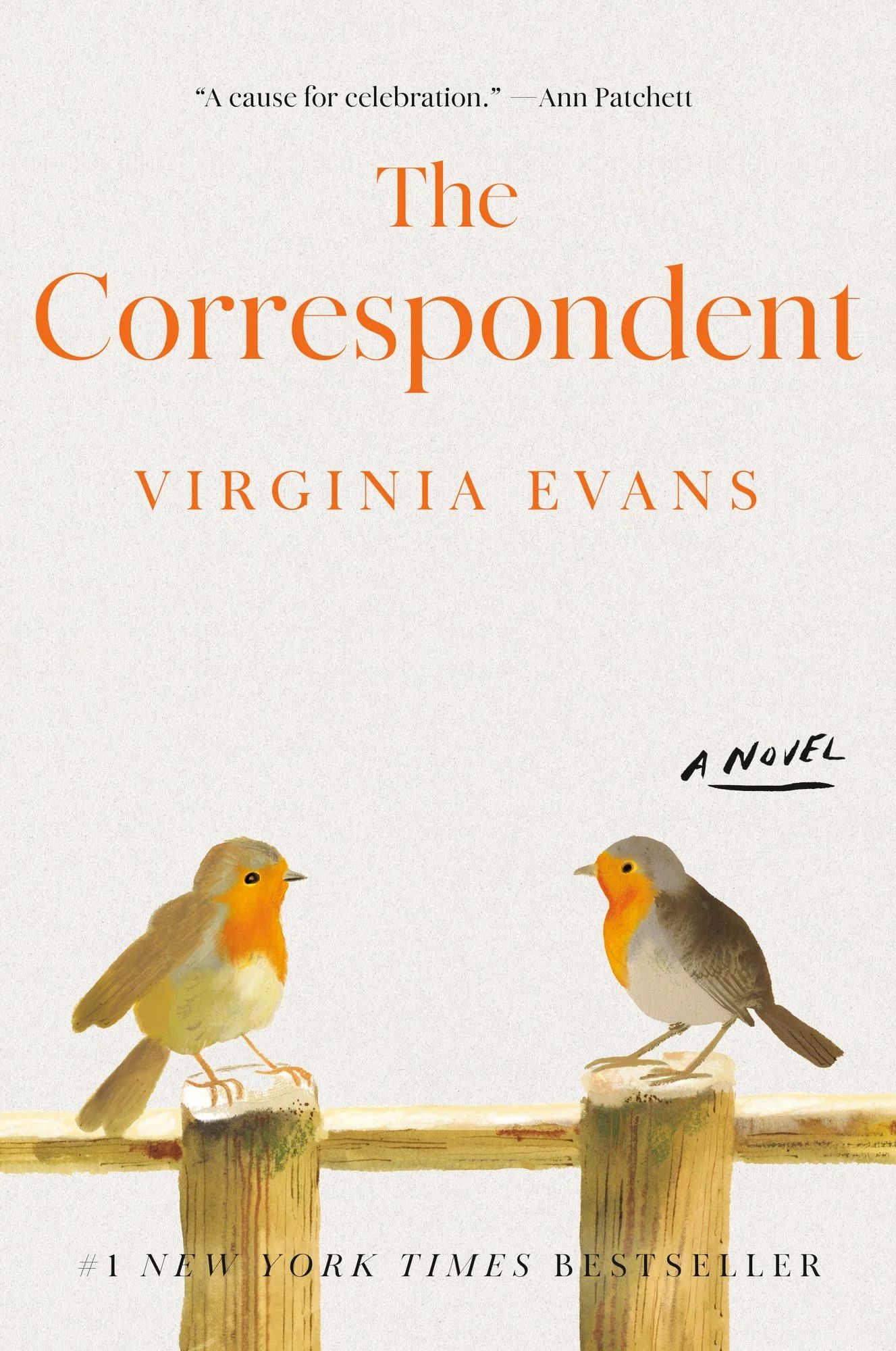
I first started hearing about The Correspondent back in March 2026 through its appearance on various book bestseller lists – bookshop.org, Kobo, bookcity.ca. I also heard caricanread mention the book in her February wrap-up video. I thought the premise of the book sounded interesting so I placed a library hold on it on March 12, 2026.
Since the book is quite popular, there is/was a large number of holds on it. So much so that by the time the end of April came around I got tired of waiting for the hold and my curiosity about the book got the better of me and I ended up buying a hardcover copy of it for myself from Book City.
With books that are this popular, I find that most of the time I either absolutely love the book or very much dislike it. Of course, I always hope for the former, I never go into a book wanting to dislike it. I had no knowledge of what was in the book other than what the descriptions said and this is my first time reading anything by Virginia Evans so I had no idea what to expect from this author.
Blurbs on my hardcover edition from – Ann Patchett, Adriana Trigiani, Florence Knapp, Fran Littlewood, Clare Chambers, Elinor Lipman, and Anne Griffin.
Let’s get into it.
The Book
The Correspondent is an epistolary literary fiction book that contains a series of letters/emails sent to and from Sybil Van Antwerp, the titular correspondent. Now, before we go any further I think I need to talk about the format of this book. This is my first time reading an entirely epistolary novel, which was one of the aspects of the book that had intrigued me when I first heard about it.
I am happy to say that I very much enjoyed the way this book was structured. The epistolary format gave the story a puzzle like feel to it. It felt that I was slowly putting together Sybil’s life using various clues that the letters provided. Every letter to and from her gave some new bit of insight into Sybil’s life and those who knew her.
I made a list of every person Sybil corresponded with in the book and there’s quite the colourful cast in here. Along with fictional characters, there are real people involved, other authors – Ann Patchett, Joan Didion, Kazuo Ishiguro, Diana Gabaldon, Larry McMurtry. I found this to be intriguing, especially Joan Didion who Sybil has a fair few letters with.
Characters
Sybil herself is also a novel character archetype for me—in other novels I have read the main characters are often in their 20s-40s. I cannot recall the last time I read a book with a main character that was older than that. Sybil is 73 at the beginning of the book which starts in the year 2012 and ends in the year 2021. There are a couple letters from Sybil’s youth in the 1950s but other than that the book maintains a steady pace forward in time.
The Correspondent is very much character driven—and Sybil is the main driver of all events in this book. Everything gets filtered through the lens of letters sent to/from her. Letters that Sybil write to others vary on tone and subject matter depending on the person she is writing to. A more familial tone with people close to her (her brother Felix or her sister Rosalie). And a less familiar tone when she writes to authors and others she isn’t as close to.
Since a fully epistolary novel eschews other forms of character development, the quality of the character development especially for secondary and tertiary characters is entirely dependent on how well the author of the book can write letters from other perspectives. The letters that get sent to her all have very different styles and tones to them—I could tell that these were written by someone other than Sybil so kudos to Virginia Evans for making these other characters feel distinct and unique.
Coming back to Sybil, one of her character traits that I found most endearing is her love for reading. There are numerous references to various books she is reading and especially in her correspondence with her sister Rosalie, there will be an exchange pertaining to what each person is reading. I made a list of books that were mentioned, there are too many to list all of them here, a few notable examples – Rebecca by Daphne du Maurier, Ulysses by James Joyce, Wuthering Heights by Emily Bronte, To the Lighthouse by Virginia Woolf.
Themes
When I was young, by writing letters I found a framework that made living easier, and that has never changed. However I do wonder if by conducting the most intimate relationships of my life in correspondence, I have kept, since I was a child, a distance between myself and others. I think it’s true the letters have insulated me, have been a force field, just as practicing law insulated me from dealing with humanity directly, and I wouldn’t change any of it, but I find myself at this old age, wanting closeness. I want closeness. Something I have not had other than when I met Dad.
page 241, Sybil
In combination with its excellent character development The Correspondent‘s thematic thrusts comes in the form of Sybil reflecting on her complicated life and the state of her various relationships at the twilight of her life. Here is where her being a septuagenarian becomes relevant—Sybil has lived a full life and here she is living alone in a nice house coming to terms with everything she has done.
This a story about regrets, and it is a story about grief. Coming into this book I was not expecting or ready for an exploration of a grief that lasts an entire lifetime, one that affects everything one does and every relationship. In the last quarter of the book as Sybil starts to really understand and unpack her grief, I was very much moved to tears by what was said. I’ll let Virginia Evans’ words do the talking here.
Grief (the biggest grief in the world) is like—What? What is that happens to a person? I’ve always felt it is like a scream living inside me. It’s gotten a bit softer over time, but it’s never gone. I walk around the house or dig in the garden or wander the grocery store or sit at my desk and there’s screaming inside my head like an air horn that warns of war.
page 242, Sybil to her daughter Fiona
And on how it affected her relationship with her ex-husband Daan:
When I play it all back I am ashamed, and yet I cannot imagine having done any other thing. Grief shared, I think, can produce two outcomes. Either you bind yourselves together and hold on for dear life, or you let go and up goes a wall too high to be crossed. For us it was the latter.
page 74
Through its letters, The Correspondent demonstrates the complexities of a life lived, of the nature of one’s relationships with others and ways grief affects us in the long term. As Sybil mentions, the letters are a shield but bits of Sybil’s suppressed grief, anger, regret, and pride all leak through. It is a beautiful demonstration of a person’s ability to reflect & change even at such a late stage of their life.
Concluding Thoughts
The Correspondent is a masterwork of character development; an especially impressive feat considering the strictures of an entirely epistolary format. Despite its large cast of characters, it also stayed tightly focused on Sybil and her perspective which painted a poignant picture of a complex life and a heartbreaking story of grief.
I am glad I read this book and I am definitely open to reading more epistolary literary fiction like it in the future. I don’t think this book quite makes it into my books of the year list for this year but it definitely will get an honorable mention when I write that blog post. This book also made me curious about the works of Virginia Woolf – if you are familiar with her writing, please let me know where I should start.
That’s all from me, see y’all in the next one.
Thank you for reading this blog post. Please consider supporting my writing work through Patreon. Additionally, please share this post on your socials and/or with your friends. It really helps! If you have any thoughts/feedback/thoughtful criticism to share, feel free to use the handy contact me page to send that to me.