She will laugh. The sound is as strange, at Briar, as I imagine it must in a prison or a church. Sometimes, she will sing. Once we talk of dancing. She rises and lifts her skirt, to show me a step. Then she pulls me to my feet, and turns and turns me; and I feel, where she presses against me, the quickening beat of her heart–I feel it pass from her to me and become mine.
page 254
Table of Contents
Why Fingersmith?
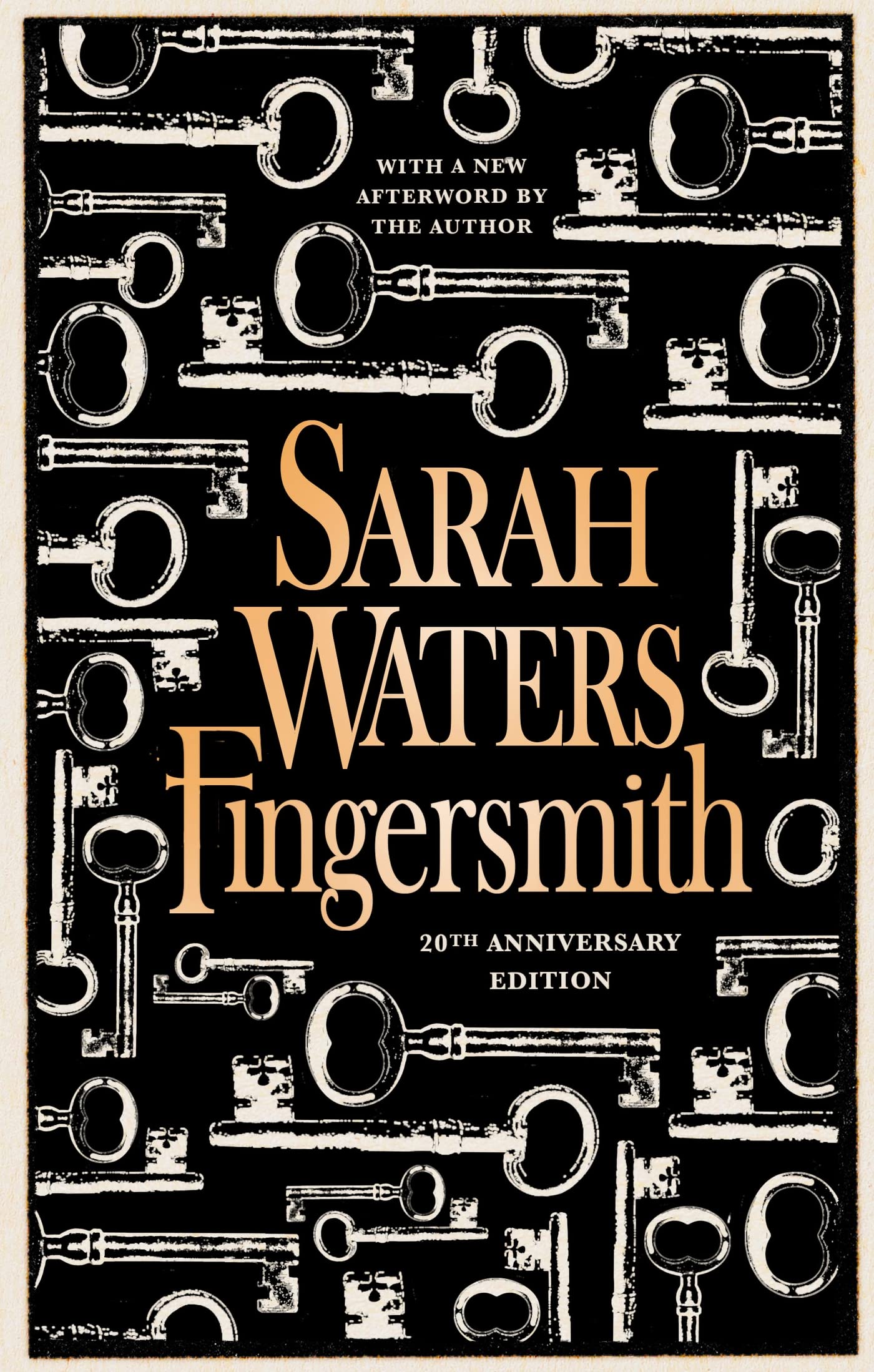
Fingersmith was another recommendation from the same friend that recommended The AI Con, and Open Water. From them I also learned that this book was what the Korean movie The Handmaiden (2016) was based on. I watched that movie many years ago and remember enjoying it so I was curious what the original story was like.
Before I read this book, I gave The Handmaiden (2016) another watch just to refresh my memory of what the movie was like. As such, the review of this book will partially be a compare-and-contrast with the movie adaptation which is not something I have done since my review of Interview with the Vampire.
This is my first time reading anything by Sarah Waters and she is not a author I have heard anything about previously. So without further ado, let’s get into it.
The Book
Fingersmith is a historical thriller set in late 19th century England. To be more specific, the Storygraph description for this book says 1862, that year is never mentioned in the book itself as far as I can remember. But it is definitely set in late 19th century England, that much is apparent from descriptions of the world our characters inhabit.
The Handmaiden (2016) reinterprets the story in a very different setting and cultural context. The movie is set in 1930s Korea during the Japanese occupation period. In addition to that, the movie changes the names of the characters while keeping the basic foundations of the story.
For example, Susan/Sue/Suky from the book becomes Sookee in the movie. Maud Lilly, the English heiress from the book becomes Lady Hideko, a Japanese heiress. Christopher Lilly, Maud’s uncle in the book becomes Uncle Kouzuki and so on. I have to admit, I much prefer the movie when it comes to setting and characterization. Late 19th century England is just not as interesting of a setting to me compared to 1930s Korea.
That said, I think Fingersmith does an exceedingly good job of painting a picture of the world the characters inhabit. The dreary overcast days, rain, the gloom, and of course the house that a lot of the book takes place in which goes by the name Briar. This is one of those books where an inanimate object, in this case this house becomes a character in itself, its stifling presence weighing on Maud as she yearns for freedom. The vibes are immaculate here.
The story of Fingersmith is told from two perspectives – Susan/Sue/Suky – the thief turned lady’s handmaiden and Maud Lilly, the young heiress living with her uncle and their servants in their grand old house. The book is divided into three parts, each part switching between either Susan or Maud’s perspectives, the book begins and ends with Sue’s perspective with the middle section being from Maud’s perspective.
I think the book does a sound job of characterization for both of our main characters. I definitely got a sense of what both Susan and Maud were like and it was fascinating to note how the two interpreted a set of events very differently. The cast of side characters here is also very colourful and interesting, notably the uncle character. I do think that the movie interpretation chooses to emphasize quite viscerally just how much of a creepy pervert he is compared to the book where that is more implied and subtle.
Thematically there is a fair bit happening here. Both versions of the story are of course lesbian historical fiction and the romantic tension between Sue and Maud is just as palpable as the romance between Sookee and Hideko. The book also subtly comments on the class differences between the two main characters along with much less subtle commentary on misogyny and institutionalization.
At the core of Fingersmith is the heiress’ desire for freedom from the strictly regimented life she lives. This desire surrounds everything and affects everything she does. Even her love for Sue is coated in this layer of desire, not just for love but finding freedom through a love that is forbidden by society at large.
The most significant divergence between the book and movie is the last arc of the story. Without spoiling either the book or the movie – the last arc and the endings are very different in the two versions. At first, I much preferred the ending of the movie but the more I think about it, I think the ending of the book makes much more sense in the context of the grander story and its themes.
Concluding Thoughts
Fingersmith was one hell of a ride from start to finish. I loved the way Sarah Waters built the world, its characters and their backstories to really give the thriller elements a lot of juice. Once the book really gets going, it doesn’t stop until the very end. As for the movie, I have developed a new kind of appreciation for it and I think Park Chan-wook’s take on the story is different enough to be interesting while also keeping most of the thematic thrusts of the original text.
Both the movie and the book are worth engaging with, and at this point my recommendation would be to read the book first before watching the movie if you haven’t already. That is my preferred order of operations when it comes to movies that are based on books. However in this case, I didn’t know the The Handmaiden (2016) was based on a book until very recently so things were done the other way around.
That is all from me, see y’all in the next one.
P.S – Fingersmith makes use of the word “queer” a lot and as is appropriate for the time period, the book uses it to mean “differing in some way from what is usual or normal” as opposed to the contemporary meaning of “queer”. Considering that this book is a thriller with a lesbian romance, it is fascinating from a linguistic perspective that both contemporary and 19th century meanings of the word apply to Sue and Maud.
Thank you for reading this blog post. Please consider supporting my writing work directly through Stripe or Patreon. Additionally, please share this post on your socials and/or with your friends. It really helps! If you have any thoughts/feedback/thoughtful criticism to share, feel free to use the handy contact me page to send that to me.